
Households should moderate large discretionary expenses for the time being.
'They should prioritise essential spending. They should maintain an emergency fund covering 6 to 12 months of expenses.'

The Indian rupee weakened against the US dollar due to rising crude oil prices, geopolitical tensions in the Middle East, and foreign fund outflows.

US-Israel air attacks intensified on the seventh day of war, striking Tehran and other Iranian cities.

Fight on toward goals that keep receding, or exit with most objectives unmet. Trump is agitated, his poll numbers falling below the Plimsoll line, his base fractured between those who back the war and those who remember that he campaigned on ending them.

The rupee appreciated 13 paise to close at 90.34 against the US dollar on Thursday, on trade deal optimism and overnight decline in commodity prices, even as the upside remained capped as investors look for more clarity on the India-US trade deal.

Stock market is gearing up for an eventful week ahead where key triggers such as quarterly earnings from corporates, the US Fed interest rate decision and the upcoming Union Budget for 2026-27 would grab the limelight, analysts said.
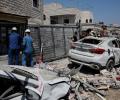
Latest satellite pictures of Iranian military and nuclear facilities released after Israeli strikes show the sites which were damaged after the operation.

Chief Economic Adviser V Anantha Nageswaran on Wednesday said that the country is not pursuing any proposal to replace the US dollar as international currency for global trade. "No, certainly not. I think India is not part of any such initiative," he said in response to a question if India is looking at an alternative currency to the US dollar for global trade.

India face hosts Tajikistan on August 29 followed by matches against Iran on September 1 and Afghanistan on September 4.

I am inclined to believe that the Venezuela adventure is not an indication of American strength, alas, but rather of American weakness, points out Rajeev Srinivasan.

Stock investors will track the ongoing conflict between Iran and Israel, Brent crude oil prices, inflation data and the US Fed interest rate decision for further cues this week, analysts said. Tariff-related news would also dictate trends in the equity market, experts noted.

United States President Donald Trump has warned that countries aligning with the BRICS economic bloc will face additional 10 per cent tariffs on their goods, as he seeks to protect the dollar's global dominance.

Israel comes under attack from a barrage of Iranian ballistic missiles.

'What we need to watch is how Saudi Arabia's financial assistance will be used by Pakistan. If the funds go to build their military hardware and operations, it should worry us.'
S&P Global Ratings on Tuesday upped India's GDP growth forecast for the current fiscal to 6.5 per cent, citing lower crude prices, monetary easing and normal monsoon, and said the ongoing geopolitical tensions are unlikely to put a "significant pressure" on the rupee or inflation.

India's macroeconomic health is in a "relative goldilocks situation", and although the risk of higher landed oil prices, due to insurance cost surges and closure of choke points due to the brief Israel-Iran war, has receded, it is "too soon to sound the 'all clear' for the rest of the year", the Finance Ministry said on Friday.
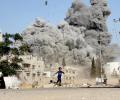
It is high time India ends its silence on the human cost of the Gaza war and takes a principled stand without diluting its relations with Israel. A largely friendless Tel Aviv today needs New Delhi more than the other way around. India's failure now may cost it diplomatically in the long run, cautions M R Narayan Swamy.

'I hear that there are some 10,000 Indians stuck in Iran, including nearly 4,000 students from Kashmir. But, I do not know any of them. Here I am all by myself and the embassy has asked me not to venture out far from my hotel. People here are going about their daily lives despite the bombings'

Red Square and VDNKh easily rank among the most striking places I've visited -- both for their historical significance and architectural splendour.
My admiration for Russian culture, vision and ambition grew with every step as I clocked the miles, Nitin Sathe tells us after a visit to Moscow and St Petersburg.
Staff Sergeant Geri Gideon Hanghal was a resident of Nof HaGalil and a soldier in the Kfir Brigade's Nahshon Battalion, the Israeli Army said.
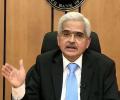
The Reserve Bank is unlikely to cut the benchmark interest rate in its forthcoming bi-monthly monetary policy review later in the week as retail inflation is still a cause of concern, and there is a possibility of the Middle East crisis deteriorating further, impacting crude oil and commodity prices, say experts.

After a robust 2023, foreign investors significantly scaled back their investments in Indian equities in 2024, with net inflows amounting to over Rs 5,000 crore, as elevated domestic valuations, coupled with geopolitical uncertainties prompted investors to adopt a more cautious stance. Looking ahead to 2025, FPI flows into Indian equities could see a recovery, supported by a cyclical upswing in corporate earnings, particularly in domestic-oriented sectors like capital goods, manufacturing, and infrastructure, Vinit Bolinjkar, head of research, Ventura Securities, said.

Dr Nagesh Kumar, one of the three new MPC members, wanted the MPC to reduce the repo rate by 25 basis points to 6.25%.

After depreciating 0.32 per cent against the dollar in October so far, the rupee is expected to hold ground against the greenback in the current quarter on the back of robust inflows. According to the median of a Business Standard poll of 10 respondents, the rupee is seen trading around 84 per dollar till the end of December. "In India's case, at least the bond and cash related inflows will continue.
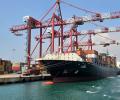
The government is looking to give Bharat Global Ports a certain amount of domestic exposure after it set up the state-owned consortium to increase India's global maritime heft, officials aware of the development said. The intended domestic exposure is meant to give the consortium experience and build its credentials for international projects.
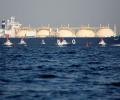
Oil and LNG prices are likely to shoot up if Iran is to block Strait of Hormuz, through which countries like India import crude oil from Saudi Arabia, Iraq and UAE, leading to a spike in inflation, analysts said on the Iran-Israel conflict. The Iran and Israel conflict has escalated over the last few days. Iran first launched drone and rocket attacks on Israel, which retaliated by firing a missile. Crude oil prices have hovered around USD 90 per barrel since the conflict.

Quarterly earnings of corporates, trading activity of foreign investors and inflation data are the key factors that are expected to drive the momentum in the equity markets this week, analysts said.

'The structural story of India is a multi-decadal story.' 'One should stay invested in that story and avoid reacting to what is happening globally.'

The three day MPC meeting began on Monday and the decision will be announced on Wednesday by RBI Governor Shaktikanta Das.

The 16th Brics Summit beginning Tuesday in Kazan, Russia, is expected to see more focus on creating a sharper energy policy for Brics that ensures closer partnership among members in both energy security and energy transition, official sources said. The same is expected to be a part of the Kazan declaration, currently being negotiated, they added.

While sources in Iran confirmed the dispute, officials of the central banks of both countries are set to meet on Friday.

On a five-day rolling basis, FPI selling is the highest in 24 years.

The UAE central bank will then make payments in dirhams to Iran.

... and there is no stopping its pan-Islamic agenda, cautions Ambassador M K Bhadrakumar.
The sanctions by Western nations came in response to a report by the UN atomic watchdog International Atomic Energy Agency about Iran's nuclear programme and after their proposal to impose new sanctions in the United Nations was blocked due to opposition from Russia and China.

Banks have raised concerns over the new international trade settlement in rupee, fearing that facilitation of such a mechanism could result in them facing the ire of economic sanctions by the West, people aware of the matter said. Large banks with overseas operations have sought clarity and assurance from the Reserve Bank of India (RBI) that they will not be targeted with sanctions for facilitating rupee trade with a sanction-hit country such as Russia. The present payment mechanism is a shift from earlier such arrangements, like the one with sanction-hit Iran, which involved banks facilitating settlement of international trade that did not have business in the sanctioned nation.

The Union government will soon make amendments to the foreign trade policy (FTP) to enable exporters to claim export benefits for settling trade in rupees. These benefits are, so far, available for export payments received in foreign currencies. After the Reserve Bank of India (RBI) unveiled a mechanism to settle international trade transactions in the local currency on Monday, exporters have been demanding that the Ministry of Commerce and Industry come up with a clarification on the matter.

More than three months after RBI scrapped a long-standing payment mechanism used to pay for Iranian crude imports, India has resumed payments to the nation's second largest oil supplier using an alternative system.

The Israel Defence Forces (IDF) said on Saturday that multiple rocket launches have been identified from Lebanon since the Yom Kippur fast started. Two UAVs were identified crossing from Lebanon into central Israel, according to IDF. A hit on a civilian building was identified and one UAV was intercepted.

Gold is an excellent asset class for diversification and should be included in all long-term portfolios.
 © 2026 Rediff.com - Advertise with us - Disclaimer - Privacy Policy - Sitemap - Feedback - About us - Terms of use - Grievances